And let's face it, Safety information is NOT the most dynamic, attention-keeping information. Nobody makes box office hits about safety talks. So how do you effectively communicate this important, potentially life-saving information for
MAXIMUM RETENTION?
We don't have to reinvent the wheel. There is a high performance operational field that has to communicate safety information on a consistent basis to an audience that is almost always unreceptive. Airlines.
Airlines are required to do a safety briefing before very flight. Most people are just not in the mood to listen to a safety briefing, especially if they have heard it many times. I fly internationally quite a bit, so I see and hear all sorts of safety briefings. The one briefing that sticks out is the Delta Safety Briefing video. They recently made some changes to the original and it is obvious that some research went into effective communication of the safety points.
The previous video had a very attractive woman with a big
smile narrating through the briefing. She was easy on the eyes, but if
you had seen the video before, there was nothing to catch your attention. There
were a couple of eye-brow raisers (melodramatically wagging the finger when
talking about the non-smoking rule, for one) but nothing worth diverting your
attention from the Sudoku puzzle.
The new video also.has an attractive woman narrating the
briefing in an upbeat friendly style. The difference is some of extras.
These are some things that a speaker can use to keep the attention of his/her
audience, even if the material is dry and repetitive.
1. Start with something off key
The more unusual, the better. One of the best memorization techniques is to associate what you want to remember with something totally off the wall. Joshua Foer, journalist, memory contest winner, and TED speaker, talked about the mental references that he used to win a memory contest. He used a familiar place along with unusual visualization (naked people on a bicycle, for example) to memorize his TED talk (see and hear it here).
 The sexier, raunchier, more thrilling, emotionally moving, or unusual, the better the brain will retain the memory. Of course we have to operate within certain parameters of respect for our audience, but there is plenty of material out there to spark the brain's memory function. A funny cartoon, a short video clip, pictures of a recent enjoyable event, etc.
Delta starts their video with a short talk from the CEO then a pilot introduces the safety briefing. Not the most exciting, but not bad either.
Giving the audience a strong emotional boost will dramatically increase the efficacy of your presentation.
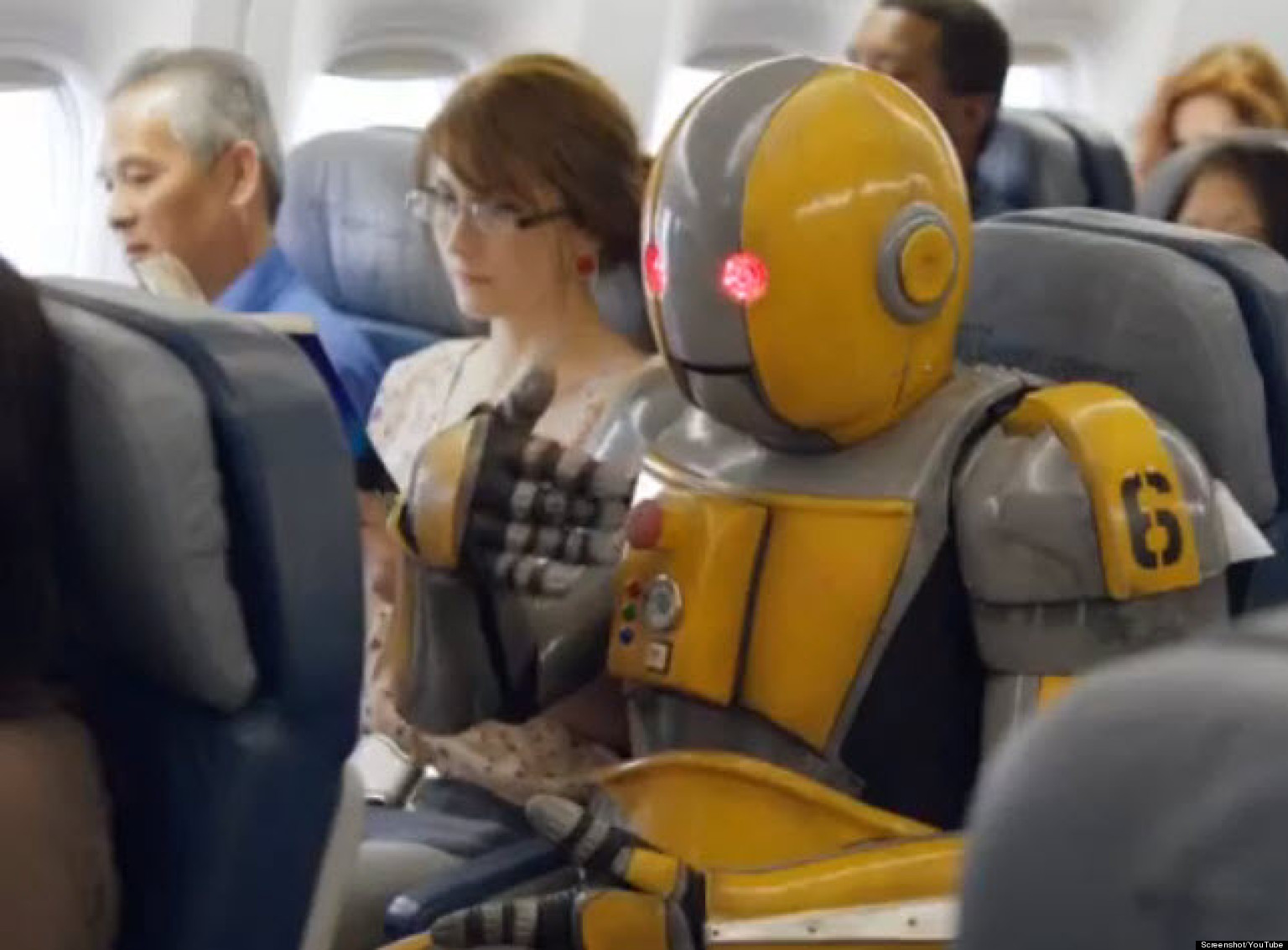 2. Small frequent laughs are better than the occasional big one.
In Delta's orientation video, there are frequent little bits of comedy. No side splitters, but scene that will make you do a mini-chuckle. (That's when you just have the one quick exhale). For example, when the narrator says that electronic devices should be switched off, they show a robot shutting himself off. Not a belly laughed, but unusual enough to catch your attention.
There are so many of these little things embedded in the
video that I find myself looking for others, even when I've seen
the video many times.
Any small emotional reaction will keep the brain from switching off and keep the memory function on.

Remember when I talked about the melodramatic finger wagging by the previous video's narrator? In the new version, they show the same attractive lady sitting in an airplane seat doing the same gesture. This 'inside joke' is familiar to passengers who have seen the previous version.
It also gives some passengers a sense of exclusivity. They
will be among the limited number of people who will get that joke. They will
pay more attention each time, especially to catch that little bit of
familiarity.
Familiarity is a great memory tool that will increase retention.
3. Sandwich the boring bits in with the funny bits
There are some serious parts to an airline safety briefing that just cant be addresses lightly. The information about how to apply an oxygen mask to yourself or your children must be presented in a straight forward manner. However that section of the video is preceded then proceeded by one of those little bits of humor.
There are some serious parts to an airline safety briefing that just cant be addresses lightly. The information about how to apply an oxygen mask to yourself or your children must be presented in a straight forward manner. However that section of the video is preceded then proceeded by one of those little bits of humor.
The human body is programmed to avoid pain. Boredom is
mental pain. When a section of the presentation is unavoidably dry, presenting
something that activates pleasure centers through amusement will drastically
reduce or eliminate that pain altogether. The same principle applies in using
the positive sandwich for giving negative feedback. Sandwiching the dry
bit between two amusing bits will increase attentiveness and retention.
This video is a great learning tool if you look between the scenes and see the development, the human factors research, and the engineering behind it. It is specifically designed to communicate highly important safety information to a non-receptive audience for the best possible mental retention.
If you would like to view the Delta Safety Video, here are the links. Enjoy!
Joshua Foer's Ted Talk on Memory Techniques: http://www.ted.com/talks/joshua_foer_feats_of_memory_anyone_can_do.html

No comments:
Post a Comment